

Spotted Lanternfly Information
May 2026
****NEW****
Subject: How to Get Rid of Spotted Lanternflies in Your Yard (Safely and Effectively)
Last year, Spotted Lanternfly populations surged across this area, disrupting outdoor activities and leaving behind sticky honeydew that turns into black, sooty mold on patios, furniture, and plants.
A major reason for this spike is their strong preference for the Tree of Heaven, where they reproduce at rates up to seven times higher than on other trees.
So what can you do?
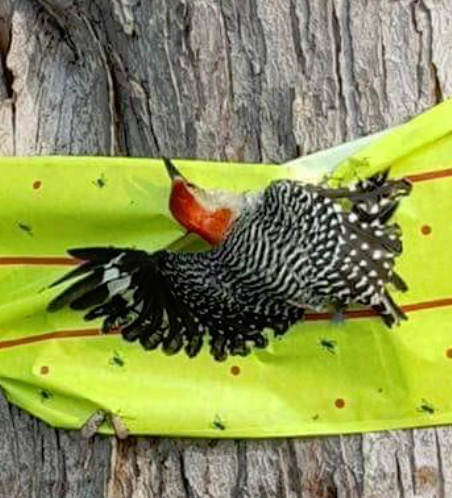
Avoid sprays and sticky bands
It may be tempting, but please do not spray pesticides or use sticky tape traps. These methods often harm birds, bats, and pollinators far more than they help control lanternflies.
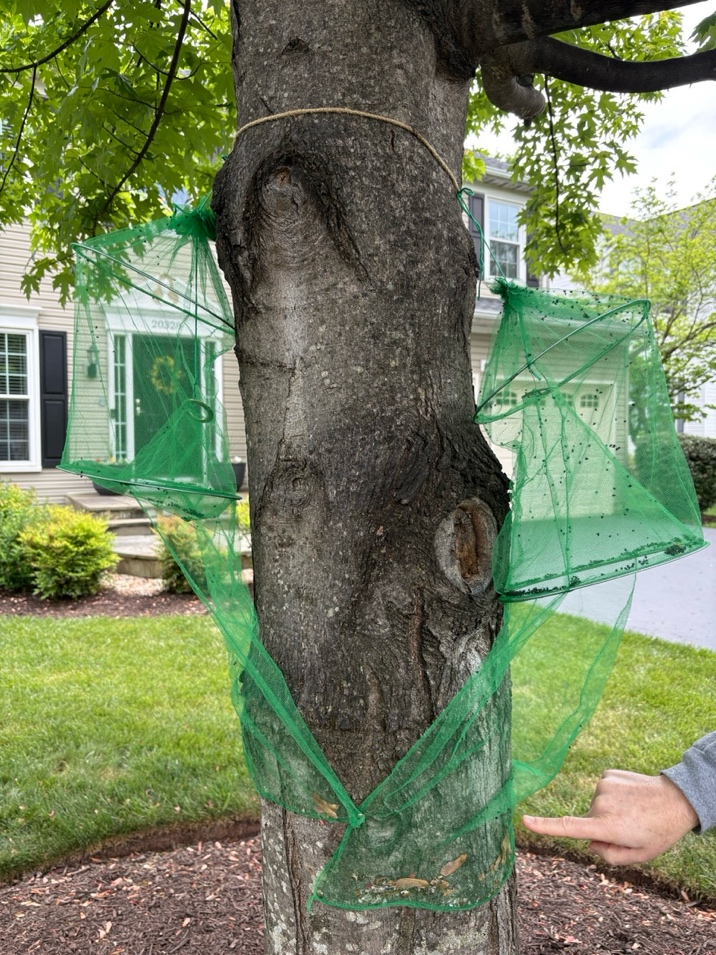
Circle traps, on the other hand, are designed to take advantage of the lanternfly’s natural behavior of climbing upward. A mesh “skirt” wraps around the tree trunk and funnels the insects into a collection container at the top.
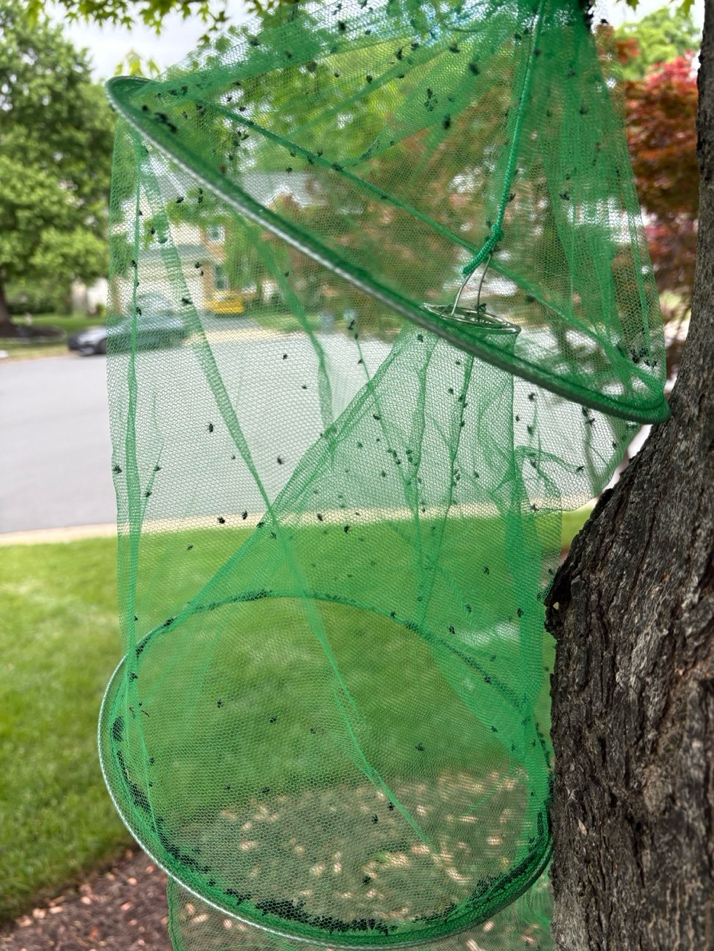
The circle traps shown were photographed this weekend in next door Courts and Ridges HOA and show hundreds, even thousands, of nymphs captured on a single tree, with no observed harm to other insects or wildlife.
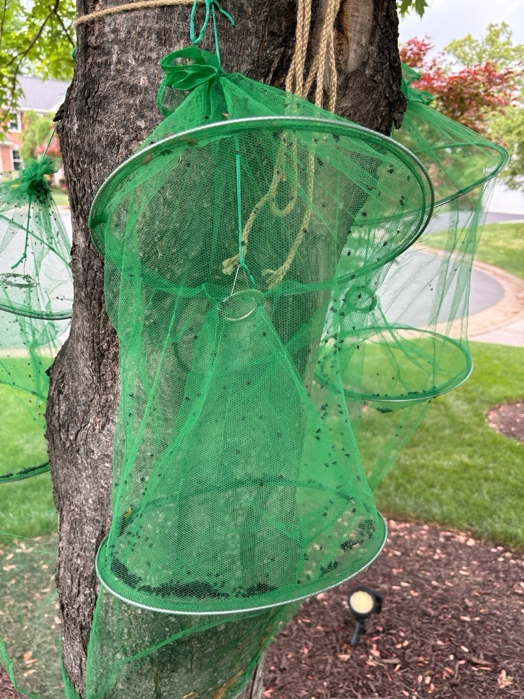
A 4 pack of this model of trap can be purchased online for about $20, making them an easy and affordable option. If you prefer a DIY approach, Penn State University provides step by step instructions for building your own using common materials.
3. See one? Squash it.
It is simple but effective. If you spot a lanternfly, stepping on it helps reduce the population.
Bottom line
Circle traps are one of the most effective ways to get ahead of this year’s lanternfly population while protecting birds, pollinators, and other beneficial species. Combined with ongoing community efforts like Tree of Heaven removal, they can make a meaningful difference in your yard this season.
_______________________________________________________________________________________
March 2025
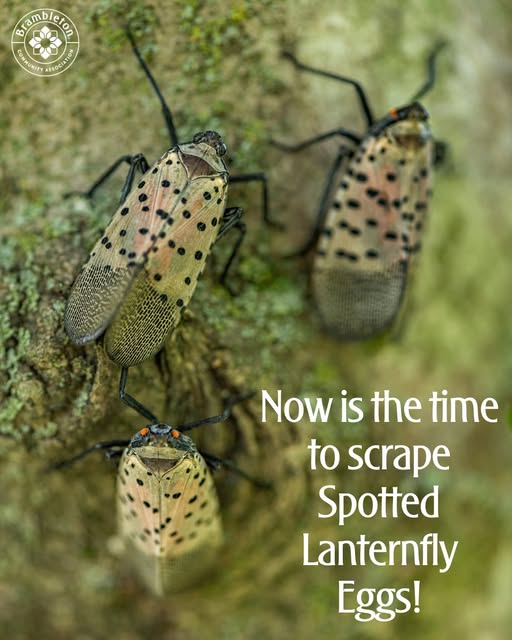
Spotted lanternfly (Lycorma delicatula) is an invasive planthopper that feeds on a wide range of plants, including grapes, hops, stone fruits, and hardwood trees. When the spotted lanternfly feeds, it excretes a sticky, sugary fluid that causes sooty mold, which can further damage plants. Its preferred host is Tree of Heaven.
Virginia Department of Agriculture and Consumer Services has created a webpage containing a great deal of information about the Spotted Lanternfly, including management and treatment.
Loudoun County also has information on the Spotted Laternfly, including photos and examples of the different stages of life.
Under “Additional Resources” on the VDACS page, you will find a link titled, “How to Identify Tree of Heaven …” which has drawings of Tree of Heaven and trees similar to it.
Pages
- Home
- Contact Us
- SFOA Board
- Committees
- Pool Information
- Rules & Application
- Ice Cream Punch Cards
- Grill & Chill 2026
- POOL HOURS
- 2026 Swim Team Schedule
- Where we are
- Announcements
- ECL Park Friends' Summer Slugfest
- Ice Cream Punchcards!
- STREAM RESTORATION - VIRTUAL MTG
- Grill & Chill 2026
- Coming Events 2026
- Community Movie Nights 2026
- SFOA Activities Committee Survey
- Keep In Touch
- Revised Pool Rules and Regulations
- Stream Restoration Project
- Spotted Lanternfly Information
- Sequoia Managment - NEW LOCATION
- **NEW** EV Charger Guidelines
- Amenities
- Calendar
- Documents
- Agendas, Monthly Board Meetings
- Annual Inspection Letter 2025
- Agendas, SFOA Annual Meetings
- Architectural Review
- Audit Reports
- Budgets
- Minutes, Monthly Board Meeting
- Minutes, SFOA Annual Meeting
- Multi-Use Court Rules
- Reserve Studies
- Governing Documents
- Articles of Incorporation
- Declaration of Covenants
- SFOA Bylaws
- Resolutions, SFOA
- FAQs
- Photo Gallery
- Resident Registry
- Useful Information
- Archives
- Meetings